
Copies and forgeries: the case of the four silver crosses
Article Sidebar
Main Article Content
Abstract
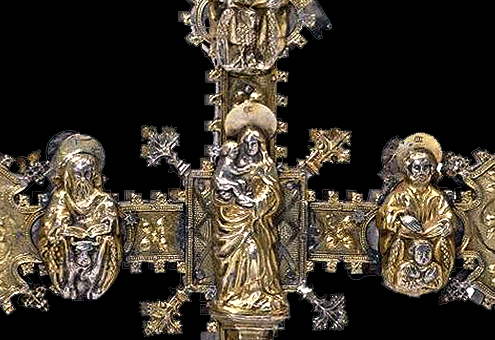
In the last years, the debate on art forgery upsurged, due to the news about networks of professional forgers detected by the police. Fake artworks have been an endemic problem in the art market, which is not nowadays passing through its best moment. This article focuses on certain examples of silverwork pieces detected in the last three years. They’re mainly related to the Spanish market, but also uncover fraudulent transactions occurred in other countries almost one century ago. The known as “Case of the Four Crosses” constitutes an actual proccess still in court.
Downloads
Article Details

This work is licensed under a Creative Commons Attribution-NonCommercial-NoDerivatives 4.0 International License.
Authors who publish in this journal accept the following conditions:
•Authors retain copyright and assign the right of first publication to the journal, with the article registered under the Creative Commons attribution licence, which allows third parties to use the published material provided that they mention the authorship of the work and its publication in this journal.
•Authors may make other independent and additional contractual agreements for non-exclusive distribution of the preprint (the version submitted to the editor), the postprint (the version after peer review) and the version of the article published in this journal (e.g., to include it in an institutional repository or publish it in a book), provided that they clearly indicate that the work was first published in this journal. Authors are permitted and recommended to disseminate their work on the internet (for example, in institutional online archives or on their websites) after publication in Además de; this can produce interesting exchanges and increase citations of the published work (see The Effect of Open Access).