
The art of napkin folding. From the palatial table to the female convents
Article Sidebar
Main Article Content
Abstract
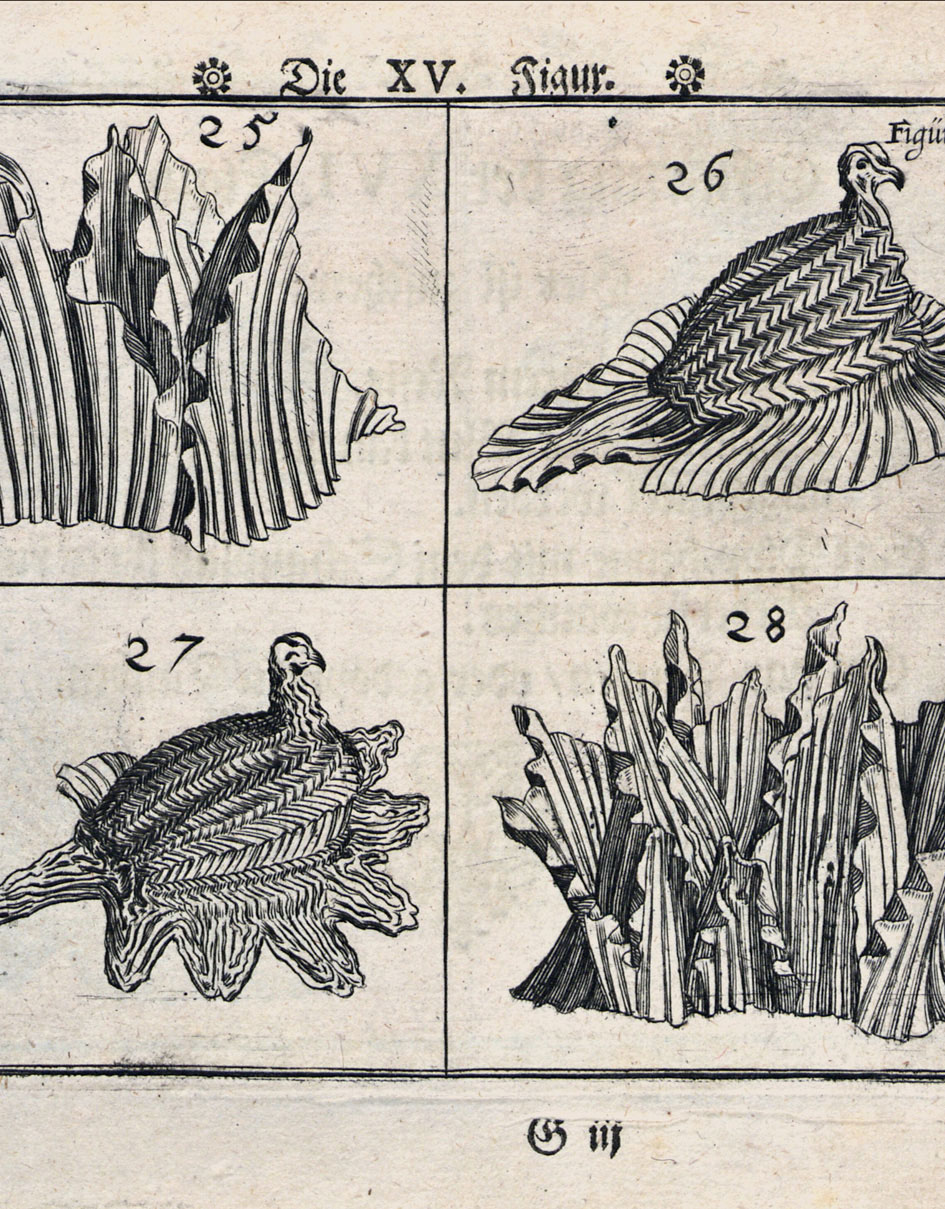
As in the rest of Europe, the ornamental folding of tablecloths and napkins also appears in the banquet descriptions of Baroque Spain. However, the absence of Spanish manuals that teach the application of these sartorial techniques to table decoration explains the scant interest of Spanish historiography in this regard, in contrast to the corpus of research available in German, Italian or French studies. This essay proposes to mitigate this imbalance, articulating its discourse in two parts: the first proposes the comparative reading of one of the most interesting texts on piegatura, that of the German poet and translator G. Ph. Harsdörffer, with French sources and somme passages from Andreas Klett's treatise; the second traces the survival in Spain of these ornamental techniques, preserved in feminine environments, through cultural practices which link them with the present.
Downloads
Article Details

This work is licensed under a Creative Commons Attribution-NonCommercial-NoDerivatives 4.0 International License.
Authors who publish in this journal accept the following conditions:
•Authors retain copyright and assign the right of first publication to the journal, with the article registered under the Creative Commons attribution licence, which allows third parties to use the published material provided that they mention the authorship of the work and its publication in this journal.
•Authors may make other independent and additional contractual agreements for non-exclusive distribution of the preprint (the version submitted to the editor), the postprint (the version after peer review) and the version of the article published in this journal (e.g., to include it in an institutional repository or publish it in a book), provided that they clearly indicate that the work was first published in this journal. Authors are permitted and recommended to disseminate their work on the internet (for example, in institutional online archives or on their websites) after publication in Además de; this can produce interesting exchanges and increase citations of the published work (see The Effect of Open Access).
References
ANÓNIMO, L’escole parfaite des officiers de bouche: contenant le vray maistre-d’hostel, le grand escuyer-tranchant, le sommelier royal, le confiturier royal, le cuisinier royal, et le patissier royal, París, Jean Ribou, 1662.
ANÓNIMO, Le confiturier françois, où est enseigné la maniere de faire toutes sortes de confitures, dragées, liqueurs ,& breuvages agréables . Ensemble la manière de plier le linge de table & en faire toutes sortes de figures, Troyes, N. Oudot, 1664.
BÁZQUEZ, Y. de, Estilo de servir a príncipes, con exemplos morales para servir a Dios, Madrid, Cosme Delgado, 1614.
BRAMENKAMP, H., Krieg und Frieden in Harsdörffers ‘Frauenzimmer Gesprächsspielen’ und bei den Nürnberger Friedensfeiern 1649 und 1650, Múnich, Hebert Utz, 2009.
CONESA SÁNCHEZ, J., Harsdörffer y su obra, Tesis Doctoral, Madrid, Universidad Complutense de Madrid, 1979.
DI SCHINO, J., “La rinascita delle arti. La divina piegatura e il trionfo di zucchero”, en COGOTTI, M. y DI SCHINO, J. (eds.), Magnificence a tavola. Le arti del banchetto rinascimentale, Roma, De Luca Editori d’Arte, 2012, pp. 83-90.
DI SCHINO, J., “Torri, castelli, giardini, pesci e animaletti scherzanti per la tavola del príncipe”, en CAZZATO, V., ROBERTO, S. y BEVILACQUA, M. (eds.), La festa delle arti. Scritti in onore di Marcello Fagiolo per cinquant’anni di studi, Roma, Gangemi Editore, 2014, vol. II, pp. 974-979.
GIEGHER, M., Li Tre trattati di Messer Mattia Giegher, bavaro di Mosburg, Padua, P. Frambotto, 1639.
HARSDÖRFFER, G. PH., Vollständiges und von neuem vermehrtes Trincir-Buch, Nuremberg, Paul Fürst, 1657.
KLETT, A., Neues Trenchir und Plicatur Büchlein, Nuremberg, Leonhard Loβche, 1677.
KLUXEN, A. M., “Harsdörffer und das Schauessen beim Nürnberger Friedensmahl”, en GERSTL, D. (ed.), Georg Philipp Harsdörffer und die Künste, Nuremberg, Hans Carl GmbH, 2005, pp. 89-103.
KREBS, J. D., “Quand les Allemands apprenaient à trancher”, Études Germaniques, núm. 41, 1986, pp. 8-23.
MATA, J. de la, Arte de Repostería en que se contiene todo género de hacer dulces…Y Diez Mesas con fu explicación, Madrid, Antonio Marín, 1747.
MORENA, A. de la (com.), Clausuras.Tesoros artísticos en los conventos y monasterios madrileños, Madrid, Consejería de Cultura, Turismo y Deporte, 2007.
MOULIN, C., “Nach dem die Gäste sind, nach dem ist das Gespräch. Spracharbeit und barocke Tischkultur bei Georg Philipp Harsdörffer”, en SCHULTZ-BALLUFF, S. y BARTSCH, N. (eds.), Perspektiv Wechsel oder: Die Wiederentdeckung der Philologie. II. Grenzgänge und Grenzüberschreitungen, Berlin, 2016, 261-287.
PERSIA, J. de (Uruch Beg), Relaciones de Don Iuan de Persia: dirigidas a la Magestad Catholica de Don Phillipe III Rey de las Españas y Señor Nuestro, donde se tratan cosas notables de Persia, la genealogía de sus Reyes, guerras de Persianos, Turcos y Tártaros y las que vido en el viaje que hizo a España:y su conversión y la de otros Caballeros Persianos, Valladolid, Juan de Bostillo, 1604.
SALLAS, J., Gefaltete Schönheit die Kunst des Serviettenbrechens, Friburgo de Brisgobia, Neubearb, 2010.
SALLAS, J., “L’arte italiana dei trionfi piegati con tovagliolo e la Descrizione di Michelangelo Buonarroti il Giovane”, en GIUSTI. G. y SPINELLI, R. (eds.), Dolci trionfi e finissime piegature. Sculture in zucchero e tovaglioli per le nozze fiorentine di Maria de’Medici. Livorno, Sillabe, 2015, pp. 39-47.
SALLAS, J., “Mattia Giegher i la primera publicación per aprendre a plegar triomfs de taula”, Datatèxtil, núm. 40, 2020, pp. 26-34. https://raco.cat/index.php/Datatextil/article/ view/366588 [última consulta: 10 de diciembre de 2021].
SCHNABEL, W. W., “Vorschneidekunst und Tafelfreuden. Georg Philipp Harsdörffer und sein Trincierbuch”, en GERSTL, D. (ed.), Georg Philipp Harsdörffer und die Künste, Nuremberg, Hans Carl GmbH, 2005, pp. 158-174.
THIEMEN, J. CH., “Die Kunst des Zerlegens. Tranchieren als virtuose Tafelunterhaltung”, en ETZLSTORFER, H., Küchenkunst und Tafelkultur. Culinaria von der Antike bis zur Gegenwart, Viena, Christian Brandstätter Verlag, 2006, pp. 263-272.
WRIGHT’S, J., An Account of His Excellence Roger Earl of Castlemaine’s Embassy from His Sacred Majesty James the IId, Londres, Roger L’Estrange, 1688.